.png)
.png)

Wei Wu Cheng Huang Temple • Founding City God of the Continent • Sui Jing Hou Cheng Huang
According to the "Book of Rites" from the Zhou Dynasty, the ancient emperors offered sacrifices to the "Water Yong God," who was the City God. "Yong" refers to the city, which is the walls built of earth and stone, while "Water" refers to the moat surrounding the outer city walls. The City God is thus regarded as the guardian deity of the people. Therefore, some officials who cared for the people's hardships or local heroes who contributed to society were revered as City Gods, such as the veneration of "Zhang Xun" as the City God in the Huaiyang region.
By the Ming Dynasty, the status of the City Gods was further categorized into different levels: national, prefectural, regional, and county. Ming Dynasty's founding emperor Zhu Yuanzhang launched the rebuilding of City God temples across the country to elevate the City God belief during his reign. Emperor Zhu once said, "I establish the City God to instill awe in people. When people feel awe, they will not act recklessly."
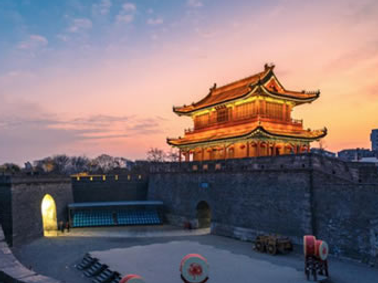
In modern society, while city walls and fortresses are no longer needed to defend the land, the spirit of the City God belief—revering heroic souls, ensuring the well-being of the nation, and promoting the values of "avoiding evil and upholding righteousness"—still provides an invisible but powerful sense of protection and stability to the people.
.png)
The patron deity worshipped at Wei Wu City God Temple is Singapore’s one and only “Zhou Cheng Huang Suijing Hou” (Marquis of Pacification, City God of the Continent).
In the year 2002, the deity’s divine general, Shui Yin Jiang (Water Yin General), was commanded to carry out the will of Suijing Hou City God, conveying the sacred intention to encourage all people to revere the divine virtue of the City God, uphold righteousness, and seek the protection and well-being of all living beings.

